Issue 003: The game reclaiming Islamic history. The fashion startup at $7M. Saudi's halal buy-now-pay-later.
Three builders. One week. The Muslim creative economy is louder than ever.
Bismillah.
There is a question that has been asked of the Muslim community: where are your builders?
This week, we have three answers.
A team of Muslim game developers who decided that if the Islamic Golden Age was going to be represented in gaming, they would have to build it themselves. A Saudi entrepreneur who looked at a $300 billion modest fashion industry and raised $7 million to own a corner of it. And a Saudi fintech founder who looked at the consumer debt economy, rejected every interest-based model in it, and built a halal alternative — and found $7.5 million in investors who agreed.
Three builders. Three industries. One clear signal: the Muslim creative and digital economy is not waiting for permission.
Let's get into it.
THIS WEEK'S BUILDERS
Three milestones. One message.
01 — THE GAME THAT REMEMBERS
House of Hikmah: The Video Game Reclaiming the Islamic Golden Age
For most of gaming history, the Islamic world has been scenery.
Desert dunes. Winding souks. The occasional minaret in the background of a level set somewhere vaguely "Middle Eastern." Muslim history — one of the most intellectually fertile civilisations the world has ever produced — reduced to an aesthetic. A backdrop. Never the protagonist.
House of Hikmah is a direct refusal of that tradition.
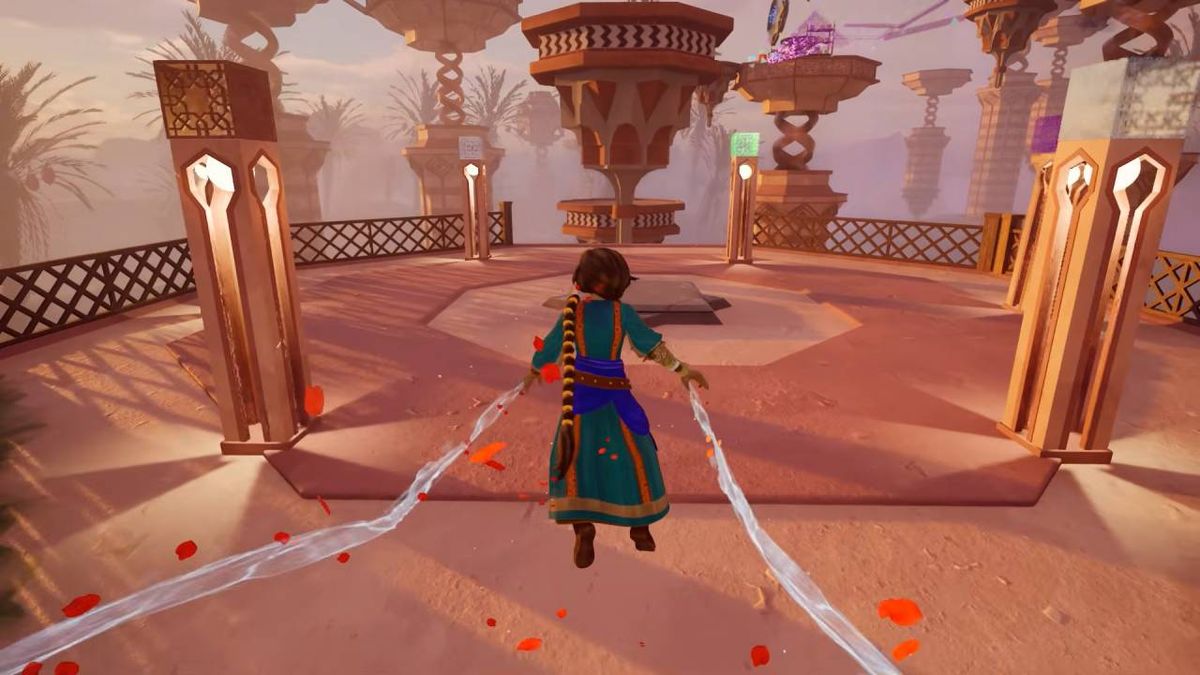
Named after Bayt al-Hikmah — the legendary House of Wisdom established in 8th-century Baghdad under Caliph Harun al-Rashid and expanded under al-Ma'mun — the game places you at the centre of the Islamic Golden Age. You are not a soldier clearing a battlefield. You are a scholar, a thinker, a builder of civilisation. The streets of Abbasid Baghdad are the world you navigate. The scholars of that era — Ibn Sina, Al-Khwarizmi, Al-Biruni, Al-Kindi — are not historical footnotes. They are characters. Teachers. Allies.
The intellectual premise of the game mirrors the intellectual premise of the real Bayt al-Hikmah: that knowledge is a trust, that the pursuit of truth is an act of worship, and that a civilisation which builds for wisdom rather than conquest is one that endures.
This is not accidental. The team behind House of Hikmah are Muslim developers who grew up watching their history either erased from popular culture or distorted beyond recognition. They made a decision that is increasingly familiar in this newsletter: if the tool does not exist, build it.
Why this matters to you:
The gaming industry generates over $200 billion annually — more than film and music combined. For most of that history, it has been built by and for a narrow demographic. Muslim-led game studios are not just a cultural correction — they are a business opportunity at enormous scale.
House of Hikmah is also proof of something deeper: that authentic representation is not a charity. It is a product. There are hundreds of millions of young Muslims who have never seen their intellectual heritage treated with dignity in an interactive medium. When that product is finally built well, the market is already waiting.
The scholars of Bayt al-Hikmah preserved and advanced the knowledge of the ancient world at a time when much of it was being lost. This team is doing something similar — preserving a legacy that the mainstream industry has no incentive to protect.
The House of Wisdom was not just a library. It was a proof that a civilisation committed to knowledge could change the world. We wanted to put that proof in the hands of a new generation.
— House of Hikmah Development Team
02 — THE BILLION-DOLLAR WARDROBE
Aya Raises $7M to Own the Future of Modest Fashion
Forbes Middle East — April 2026 · Read →
The global modest fashion market is not niche. It is not a trend. It is a $300 billion industry and growing — driven by 1.8 billion Muslim consumers, a rising generation of values-aligned shoppers across every demographic, and a fashion industry that has, for decades, treated modesty as an afterthought.
Aya, the Saudi-founded modest fashion platform, has just closed a $7 million funding round — a clear signal from the investment community that this market is too large to ignore.
What Aya is building is not simply a modest clothing store. It is a curated, tech-enabled fashion platform designed specifically for the Muslim woman who refuses to choose between elegance and her values. The platform connects designers and brands who understand modest dressing not as a restriction but as an aesthetic language — and delivers that directly to consumers who have historically had to navigate mainstream retail to find pieces that work for them.
The founding of Aya out of Saudi Arabia is significant. The Kingdom's Vision 2030 agenda has accelerated the development of a domestic fashion and creative economy that sits entirely outside Western fashion capitals. The result is an ecosystem of designers, brands, and platforms that are building for Muslim consumers without needing to translate their product for a non-Muslim market first.
Why this matters to you:
Fashion is one of the most visible intersections of Muslim identity and consumer spending — and it has been historically underserved by platforms that either do not understand the market or are not structurally positioned to serve it well.
Aya's $7 million round is validation that building natively for the Muslim consumer — not as a secondary market, but as the primary audience — is a fundable, scalable thesis. For Muslim founders in any consumer vertical, this is the template: own your community's market before the generalists discover it exists.
Modest fashion is not a limitation. It is a design language with a billion speakers. We are building the platform it deserves.
— Aya Founding Team
03 — BUY NOW, NO RIBA
Muhlah Raises $7.5M Seed to Build Saudi Arabia's Halal BNPL
Instagram / Islamic Finance News — April 2026 · Read →
Buy-now-pay-later (BNPL) has become one of the fastest-growing segments in consumer finance globally. The appeal is simple: split a purchase into instalments, smooth out your cash flow, access what you need today.
The problem, for the Muslim consumer, is equally simple: most BNPL models are built on interest. The late fees, the instalment structures, the revenue models underneath — Riba, repackaged as convenience.
Muhlah (مهلة) is the Saudi fintech startup that decided to solve this without compromise.
The company has raised a $7.5 million seed round to build a fully Sharia-compliant deferred payment platform for Saudi consumers and merchants. The name itself signals the intent: muhlah means a respite, a grace period — the concept of giving someone time to pay rooted in Islamic jurisprudence long before BNPL became a Silicon Valley product category.
The structure Muhlah uses replaces interest-based financing with Sharia-compliant contracts — giving merchants the cash flow certainty of a BNPL model while giving consumers a payment product that does not compromise their values. The $7.5M seed round, led by a consortium of Gulf-based investors, positions Muhlah to capture a share of the Saudi consumer finance market at a moment when the Kingdom is one of the fastest-growing retail economies in the world.
Why this matters to you:
Muhlah's raise is significant for two reasons. First, it proves that "halal by design" is now a viable investment thesis — not a charitable positioning, but a genuine competitive advantage in a market of 1.8 billion Muslims who actively want financial products free from Riba. Second, it is a reminder that almost every consumer finance product built in the West has a halal equivalent waiting to be built — BNPL, mortgages, credit cards, investment platforms. The founders who move first, and build with the depth of Islamic jurisprudence rather than bolting on a compliance label, will own these markets.
The concept of giving someone a grace period to pay is older than modern finance. We are not inventing something new — we are returning to something true.
— Muhlah Founding Team
YOUR STORY IS NEXT
Three builders. Three industries — gaming, fashion, fintech — each one a corner of an economy that is no longer waiting to be built.
A team of Muslim developers giving the Islamic Golden Age the interactive epic it has always deserved. A Saudi founder proving that a $300 billion fashion market belongs to the people who actually understand it. A fintech entrepreneur who looked at consumer debt, found the Riba, and built the alternative.
This is the pattern: the Muslim builder who goes deep, who starts from values rather than fitting values onto someone else's model, and who trusts that their community is a large enough market to build for first — that builder wins.
And the builders we have not yet found outnumber those we have. If you are building something Sharia-compliant, if you know a Muslim founder whose work deserves an audience, or if there is a tool or platform quietly reshaping how our community operates — we want to know.
Have thoughts on this issue or an idea for the ecosystem? Reach out directly at founder@ummahnext.com.
Share Issue 003 with one Muslim builder in your network. That is how this community expands — not through algorithms, but through trust.
Jazakallahu Khayran. See you next week.
— The Ummah Next Team